

Contact Us
lf you have any queries, get in touch today! Don't hesitate, We try to take the extra step forour customer satisfaction.

Hey there, I’m Steve!
I’m the sales manager of exnan medical silicone. I have been in this field for more than ten years. If you are looking for custom-made silicone rubber products, feel free to ask me any questions.
"
Our certificate
Possess 800 square meters of Class 10,000 dust-free workshop, Passed ISO9001:2015 quality management system certification and ISO13485:2016 medical device quality management system, and its products have obtained multiple biocompatibility tests, US FDA and EU LFGB certifications.
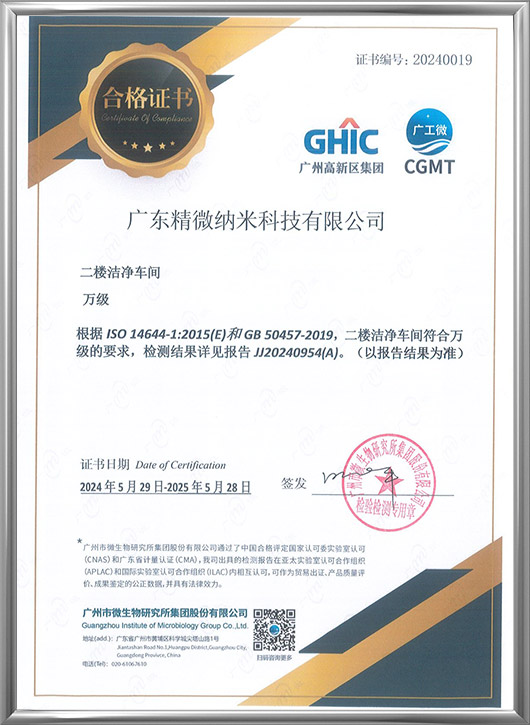
Class 10,000 cleanroom certification
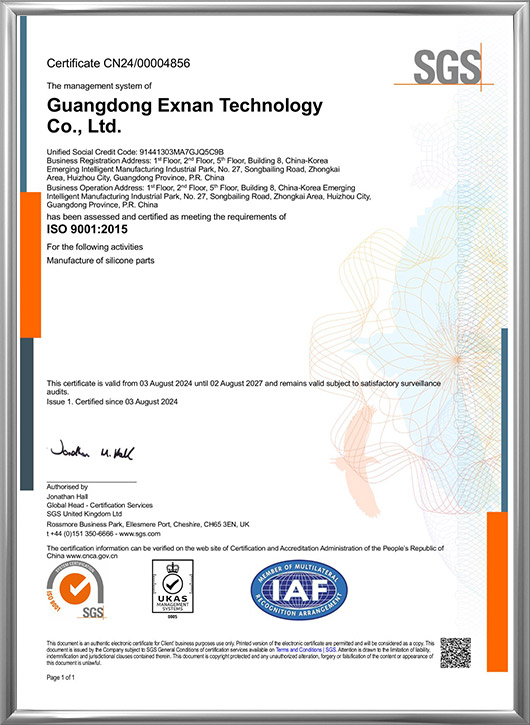
ISO 9001:2015
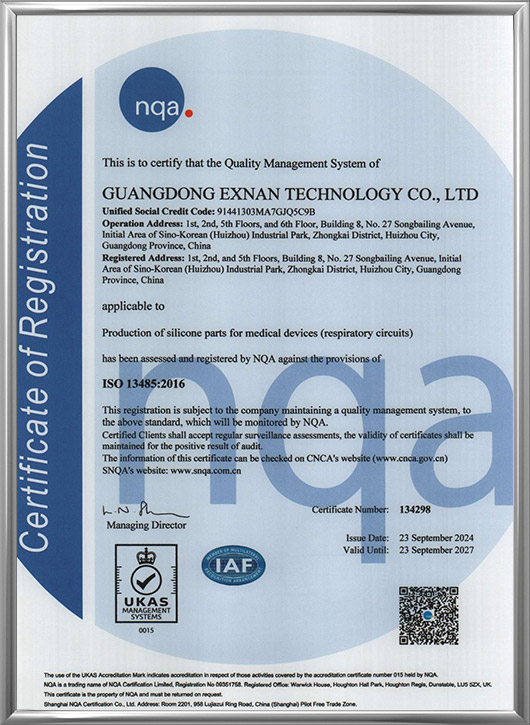
ISO 13485:2016
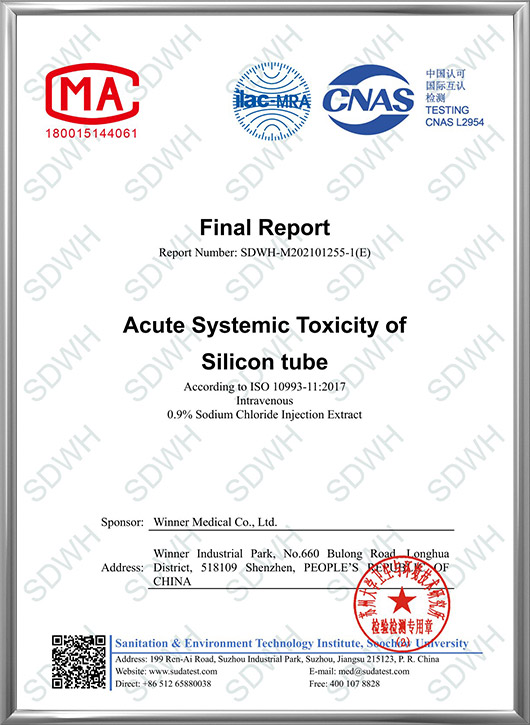
ISO 10993-11:2017 Tail vein injection
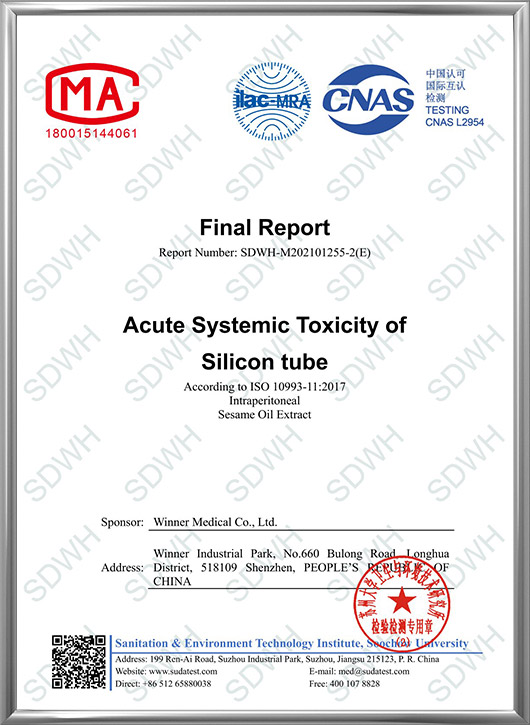
ISO 10993-11:2017 Intraperitoneal injection
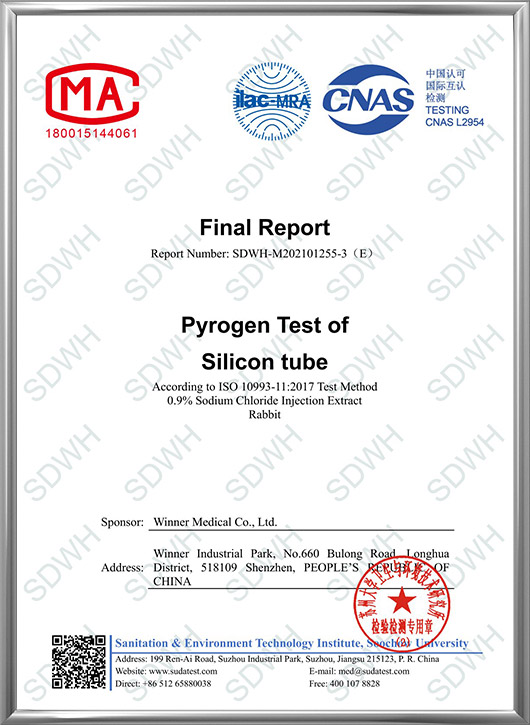
ISO 10993-11:2017 Pyrogens
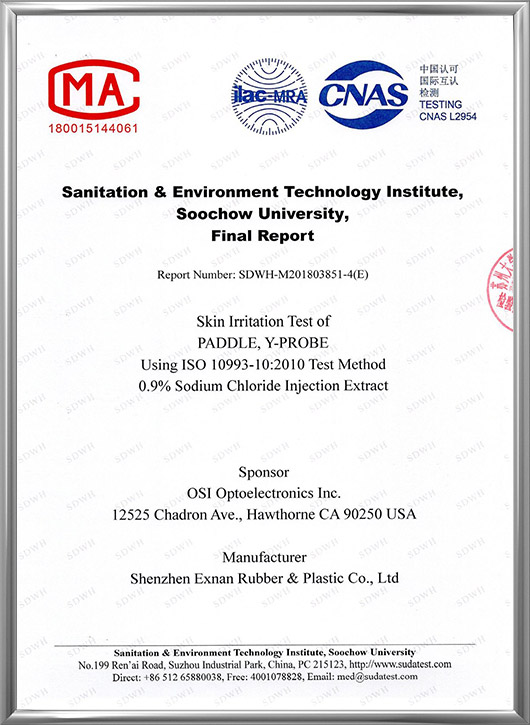
Skin irritation test for extract of 0.9% sodium chloride injection
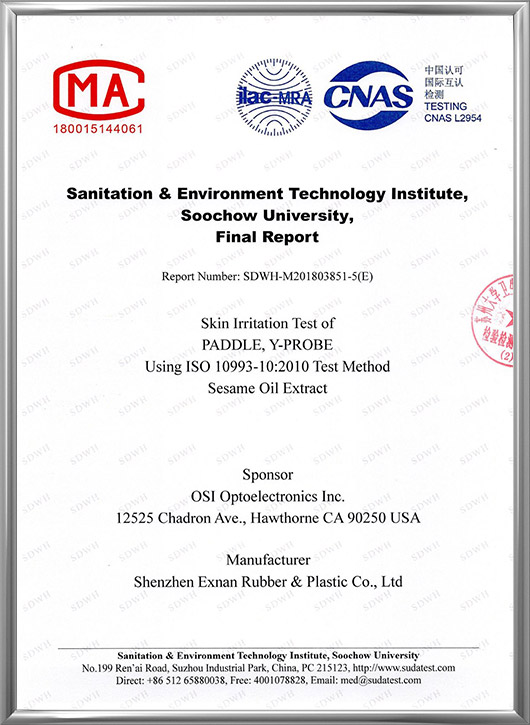
Skin irritation test for sesame oil extraction
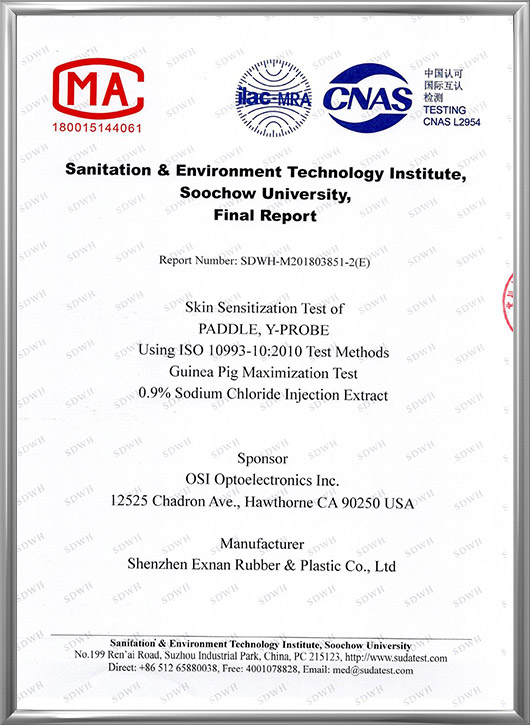
Skin sensitization test in guinea pigs using the maximization method with 0.9% sodium chloride injec
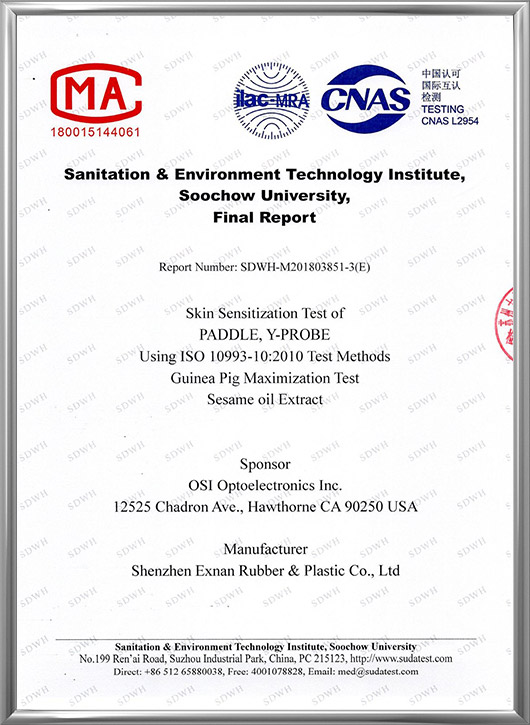
Skin sensitization test in guinea pigs:maximization method with sesame oil extraction
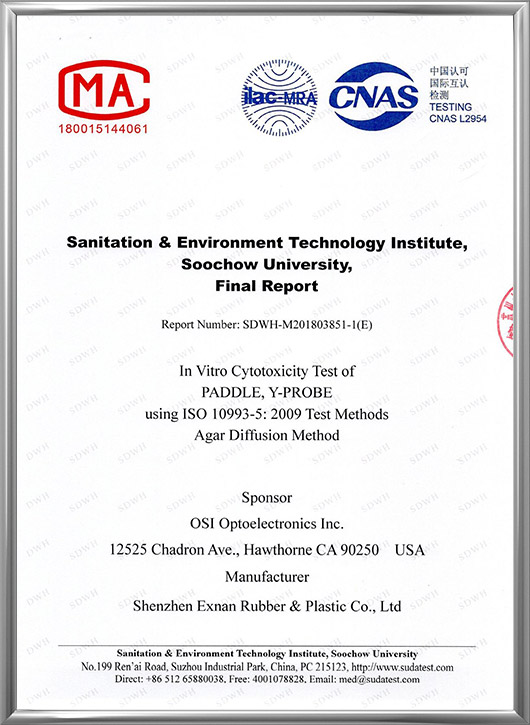
Cell toxicity test:agar diffusion method
Cooperating customers
Till now, Exnan products has been exports 35 countries, and more than 500 Medical equipment factory, health care companies, hospitals, clinics use our products, and win good reputation.








New
Our silicone accessories meet international medical standards through strict quality control.
Ensure patient safety with our premium products. Explore our catalog today!
News
Our silicone accessories meet international medical standards through strict quality control.
Ensure patient safety with our premium products. Explore our catalog today!
Why 83% of Medical Device OEMs Switch Silicone Suppliers (And What You Should Demand)
Time: 2025-06-20 10:18:43
Author: Guangdong Exnan Technology Co.,Ltd
Click:
Hey engineers, I know you've been there. Have you ever stayed up all night, worried sick about silicone seals failing biocompatibility tests or mold flashing ruining an entire batch of surgical tools? Well, you're not in this alone. In fact, four out of five medical OEMs we've talked to are actively rethinking their silicone partners after facing those costly setbacks.

Hey engineers, I know you've been there. Have you ever stayed up all night, worried sick about silicone seals failing biocompatibility tests or mold flashing ruining an entire batch of surgical tools? Well, you're not in this alone. In fact, four out of five medical OEMs we've talked to are actively rethinking their silicone partners after facing those costly setbacks. It's like a wake - up call, isn't it? Let's take a look at what makes the difference between a compliant supplier and a compliance nightmare. (Fun fact: That 83% stat? It comes from B2B MedTech’s 2024 Global Sourcing Survey – you can find it on page 22.)
The 4 Non - Negotiables Your Current Supplier Might Overlook
1. Material Compliance Isn’t Just Paperwork
Imagine using an IV drip chamber that hasn't passed basic toxicity screens. Scary, right? USP Class VI is like the safety net for these basic toxicity checks. And for implants, ISO 10993 - 5 is the gold standard for full cytotoxicity/genotoxicity testing. If a vendor offers “medical - grade” silicone without third - party certs, it's a huge red flag! It's like buying a car without a safety inspection. Download FDA’s material guidance here
2. Precision Engineering: Where 0.001″ Matters
We recently came to the rescue of a ventilator manufacturer. They were struggling with chronic valve leaks, and it was a real headache for them. But we tightened the tolerances to ±0.003″ using micro - mold sensors, and the problem was solved! It's amazing how such a tiny adjustment can make a huge difference. Anything looser than ±0.005″ risks seal failures in dynamic parts, which is like a ticking time bomb in medical devices.
3. Cleanrooms: ISO 7 Isn’t “Nice to Have” – It’s Non - Optional
Think about it. For lab equipment seals, ISO Class 8 with 100,000 particles/ft³ might be okay. But for blood - contact devices, ISO Class 7 with only 10,000 particles/ft³ is an absolute must. It's like the difference between a regular room and a sterile operating theater. A pro tip: Don't just settle for certificates. Demand particle count logs. It's like asking for the report card of the cleanroom.
4. Traceability Isn’t Optional
Last year, a German orthopedic OEM faced an FDA audit. It could have been a total disaster, but with our Lot Track Codes, we traced material batches to sterilization validation reports in less than 20 minutes. No more scrambling through paperwork in a panic. It's like having a super - efficient detective on your side.

Critical Fixes for High - Risk Applications
| Device Type | Silent Killer | Engineering Fix |
| Surgical Tools | Tearing at hinge points during autoclaving | EXNAN’s LSR - 4850** (55 Shore A, tear strength 55 kN/m |
| Implantables | Plasticizers leaching into tissue | Platinum - cured silicones – zero peroxides |
| PCR Seals | Compression failure after freeze - thaw cycles | Fluorosilicone FSR - 702** (-55°C to 205°C stability |
The 7 - Point Supplier Checklist (Steal This)
1. Never accept in - house biocompatibility reports – Demand Nelson Labs or Eurofins third - party validations. It's like getting a second opinion from the best doctors in town.
2. Tooling proof: Ask for mold flow simulation videos (see our recent knee implant gate study). It's like looking under the hood of a car before you buy it.
3. Regulatory partnership: Can they generate PPAP packs? (Grab our FDA submission template below). A good supplier should be your partner in this regulatory maze.
4. Steer clear of “high - volume only” suppliers** – Patient trials need 50 - piece batches. It's like trying to fit a big - size shoe on a small foot.
5. Sterilization validation: Demand data for *your exact method* (ETO vs. gamma vs. e - beam). You need to know exactly how your products are being sterilized.
6. Get Material Conformation Certs (MCCs) BEFORE tooling kickoff. It's like having the blueprint before building a house.
7. Video audit clause: No facility tour? Require live drone walkthroughs. It's like having a virtual visit to the supplier's place.

When Switching Pays Off: Real Data
- Northwell Orthopedics: Reduced material waste by 37% after our cavity sensors detected under - curing. It's like finding a way to save money and resources at the same time.
- Axel Life Sciences: PCR machine downtime dropped 91% after switching to EXNAN fluorosilicone seals. It's like giving a sick machine a new lease on life.
Ready to Ditch Compliance Guesswork?
Before you request quotes:
1. Have CAD files ready (.STEP preferred). It's like having your homework done before class.
2. Confirm annual volumes (even estimates). It's like planning your journey and knowing how much fuel you'll need.
3. Know your sterilization protocol. It's like having a map for your destination.

Includes:
- FDA/CE doc templates
- USP Class VI vs. ISO 10993 - 5 crosswalk
- Sterilization validation tracker
→ Need Proof? Request Biocompatibility Test Samples
P.S. EU - based? Ask about our Germany facility audits – 14 TÜV - certified cleanrooms live - streaming QA data 24/7

点击右上角
分享给朋友吧







 Long by picture save/share
0
文章推荐
Silicone Parts Fail After Sterilization: 5 Proven Fixes
Medical Silicone vs. TPE/TPU: Why Is Silicone Still the Preferred Material for Medical Consumables?
Medical Silicone Mold Design: The First Gateway to Product Precision
New Requirements of ISO13485:2016 for Medical Silicone Suppliers
Medical Silicone Consumables Market Sees New Growth: Respiratory Equipment Drives Demand for Precision Components
Related news recommendations —
Related Products —




News Products —
INQUIRY


Add Successfully

Hey there, I’m Steve!
15+ years in medical silicone accessories, linking manufacturers and healthcare providers for compliant, high-quality products. Trusted advisor focused on innovation and patient care. If you are looking for custom-made silicone rubber products, feel free to ask me any questions.
Hey there, I’m Steve!
15+ years in medical silicone accessories, linking manufacturers and healthcare providers for compliant, high-quality products. Trusted advisor focused on innovation and patient care. If you are looking for custom-made silicone rubber products, feel free to ask me any questions.
Welcome to contact us
If you have any questions, please fill in the relevant information. Weare very willing to provide more information and a full range ofservices for both you and your company
Welcome to contact us
If you have any questions, please fill in the relevant information. Weare very willing to provide more information and a full range ofservices for both you and your company
EXNAN
点击右上角
分享给朋友吧
Copyright © 2004-2024 Guangdong Exnan Technology Co.,Ltd
点击右上角
分享给朋友吧
Copyright © 2004-2024 Guangdong Exnan Technology Co.,Ltd

 +86-0752-3869959 / 3869960
 +86 180 0752 8206
 Building 8, China-Korea Emerging Intelligent Manufacturing Industrial Park, No.27, Songbailing Road, China-Korea (Huizhou) Industrial Park, Zhongkai Area, Huizhou City, Guangdong Province, China

WeChat scan
