

Contact Us
lf you have any queries, get in touch today! Don't hesitate, We try to take the extra step forour customer satisfaction.
"
Our certificate
Possess 800 square meters of Class 10,000 dust-free workshop, Passed ISO9001:2015 quality management system certification and ISO13485:2016 medical device quality management system, and its products have obtained multiple biocompatibility tests, US FDA and EU LFGB certifications.
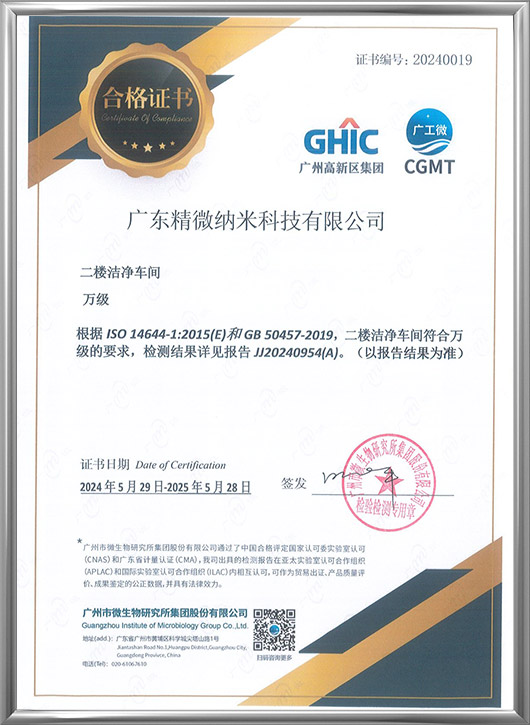
Class 10,000 cleanroom certification
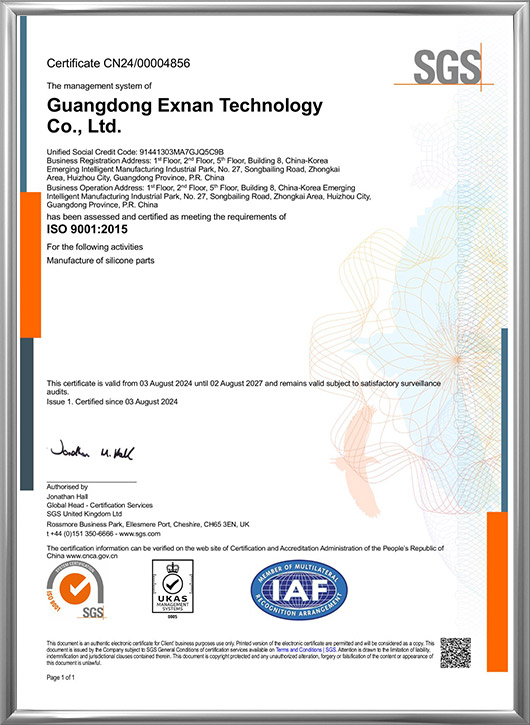
ISO 9001:2015
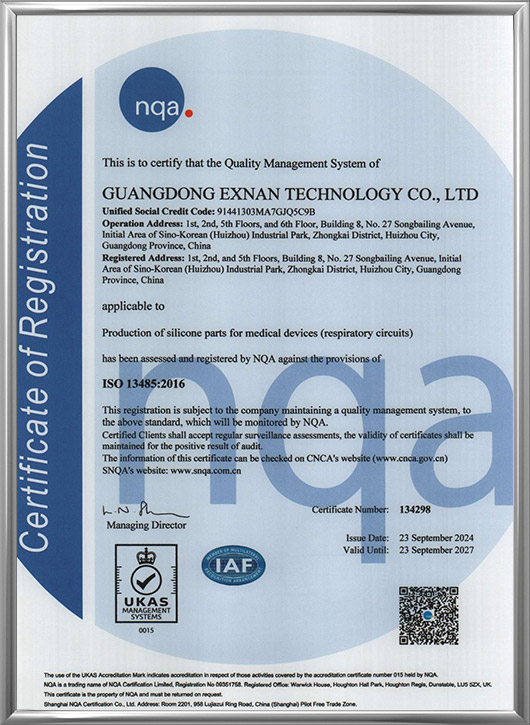
ISO 13485:2016
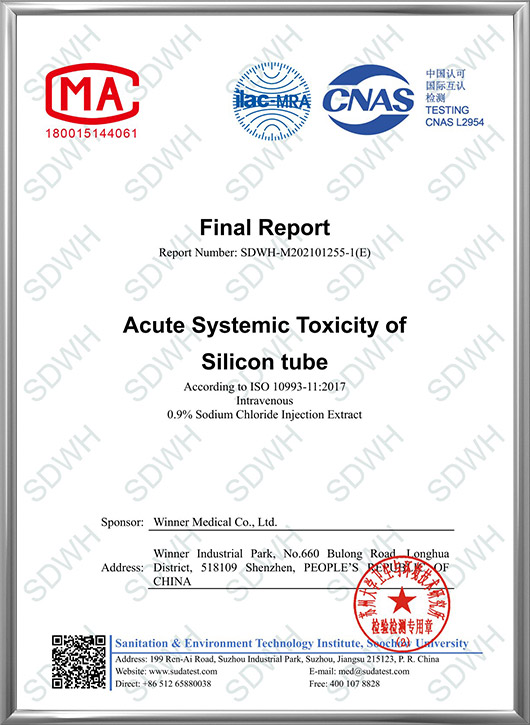
ISO 10993-11:2017 Tail vein injection
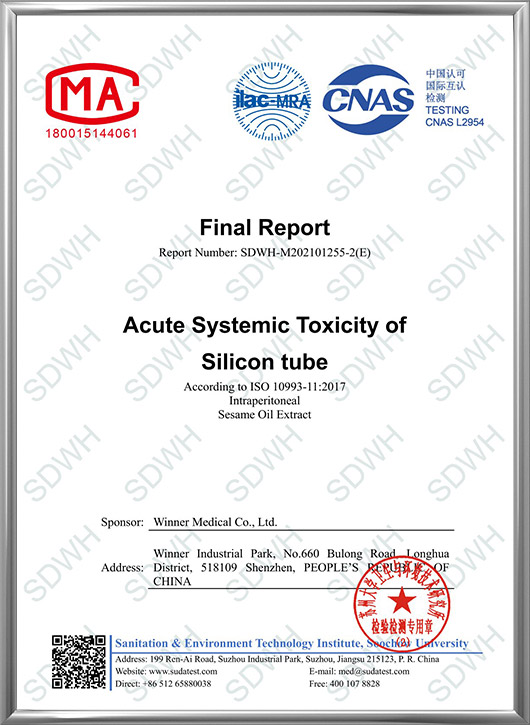
ISO 10993-11:2017 Intraperitoneal injection
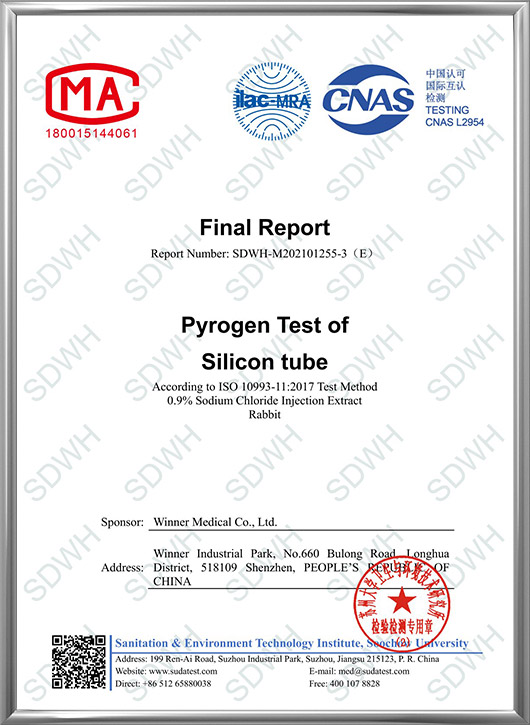
ISO 10993-11:2017 Pyrogens
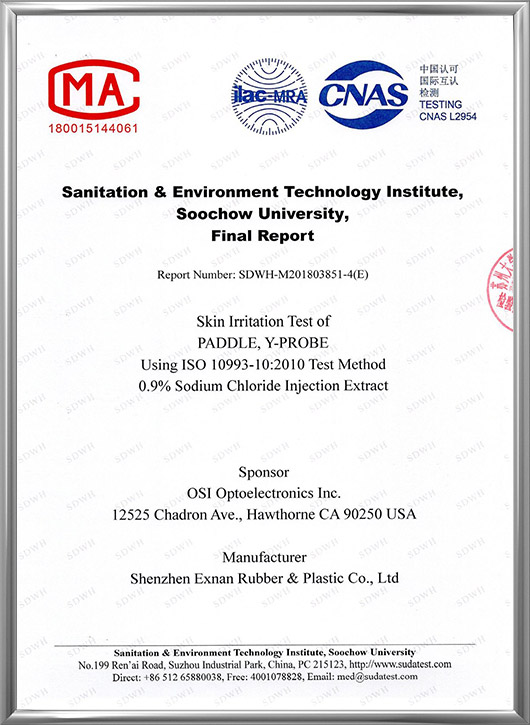
Skin irritation test for extract of 0.9% sodium chloride injection
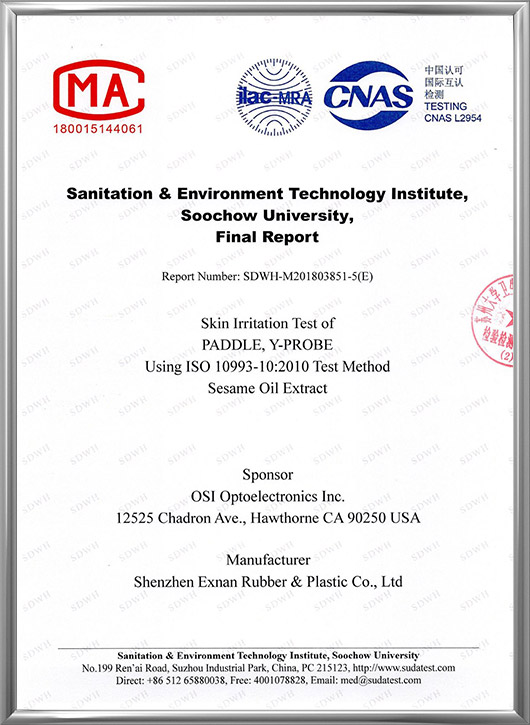
Skin irritation test for sesame oil extraction
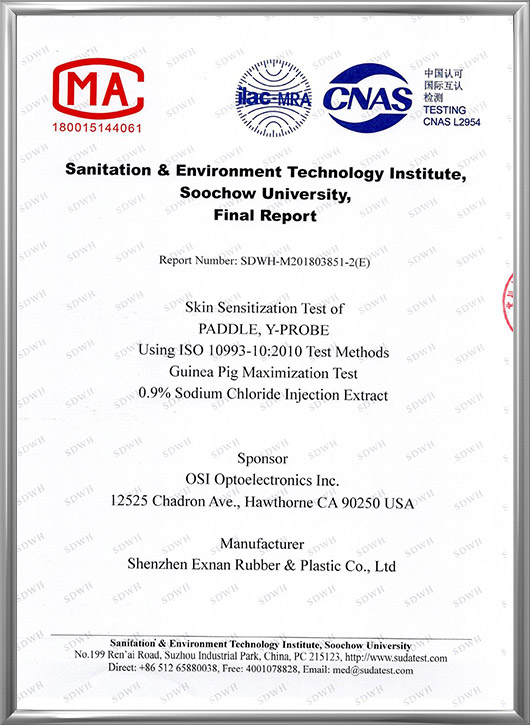
Skin sensitization test in guinea pigs using the maximization method with 0.9% sodium chloride injec
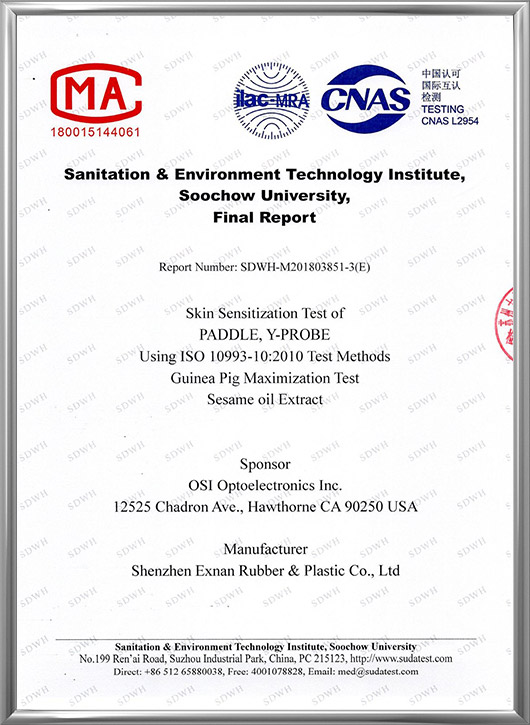
Skin sensitization test in guinea pigs:maximization method with sesame oil extraction
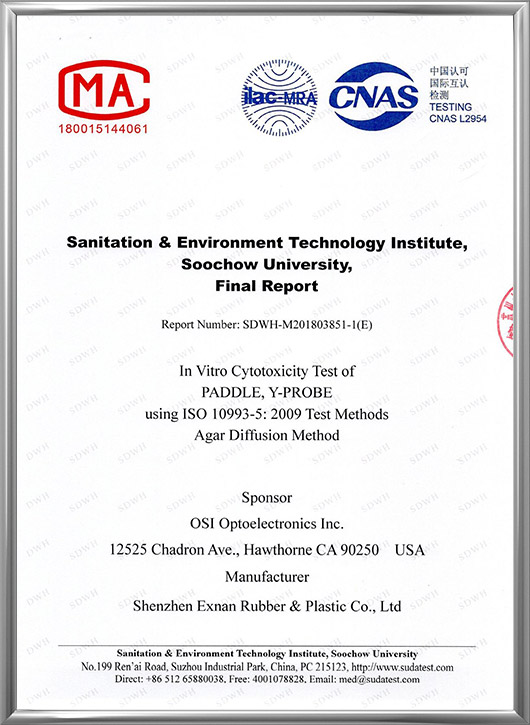
Cell toxicity test:agar diffusion method
Cooperating customers
Till now, Exnan products has been exports 35 countries, and more than 500 Medical equipment factory, health care companies, hospitals, clinics use our products, and win good reputation.














New
Our silicone accessories meet international medical standards through strict quality control.
Ensure patient safety with our premium products. Explore our catalog today!
News
Our silicone accessories meet international medical standards through strict quality control.
Ensure patient safety with our premium products. Explore our catalog today!
-

Which industries use silicon?
Silicon is primarily utilized in the electronics industry for manufacturing semiconductors and integrated circuits. While elemental silicon has key uses in electronics and metallurgy, many industrial applications involve its derivatives like silicones or silica. Electronics: Semiconductors, solar cells, integrated circuits. Metallurgy: Alloying agent (e.g., aluminum-silicon alloys). Construction: Silica (sand) in concrete, glass, ceramics. Chemicals: Production of silicones and silanes. Photovol
MORE -

What is the difference between HTV and LSR silicone?
HTV silicone is typically specified for applications demanding high drinking water purity or specific food-contact approvals. LSR (Liquid Silicone Rubber), while also suitable for high food quality requirements, excels in scenarios needing superior mechanical performance; tear resistance is a prime example of its advantage.
MORE -

How to know if silicone is high quality?
Assess Visual & Tactile Features. Premium silicone typically exhibits a smooth, consistent surface free from blemishes, air pockets, or irregularities. It should feel uniformly soft and pliable to the touch.
MORE -

What is the difference between food grade and medical-grade silicone?
While both are safe for their intended uses, medical-grade silicone undergoes stricter testing and refinement for biocompatibility within the body. Food-grade silicone is approved for food contact but doesn't meet the biological compatibility requirements for medical applications.
MORE -

What is considered medical-grade silicone?
Medical-grade silicone refers to a synthetic, non-toxic, and inert elastomer. To earn this designation, it must pass rigorous biocompatibility assessments confirming its **safety and stability during prolonged interaction with bodily tissues and fluids.
MORE -

How do you manufacture silicone parts?
Silicone parts are most often produced using injection molding. This process injects liquid silicone rubber (LSR) under high pressure into a mold. Due to the material's thermosetting properties, thorough distributive mixing is essential. This high-volume method yields flexible and long-lasting parts.
MORE -

Why is silicone used in medical devices?
ilicone is often chosen for medical devices because it is biocompatible, chemically inert, non-toxic, flexible, and translucent. It also lacks odor or taste. Furthermore, silicones can be easily sterilized using various methods, ensuring safety in healthcare environments. This combination makes them suitable for disposable items like many catheters and tubing.
MORE -

What are the benefits of medical-grade silicone?
Silicone advantage in medical High stability in adverse temperatures and resistance to chemical and thermal degradation. Conformable and soft to the touch. Superior hydrophobicity offers lubricious coating for syringes and surgical tools. Exceptional water repellency to ensure bacterial resistance.
MORE
Recent News
—
Welcome to contact us
If you have any questions, please fill in the relevant information. Weare very willing to provide more information and a full range ofservices for both you and your company
Welcome to contact us
If you have any questions, please fill in the relevant information. Weare very willing to provide more information and a full range ofservices for both you and your company
EXNAN

点击右上角
分享给朋友吧
Copyright © 2004-2024 Guangdong Exnan Technology Co.,Ltd
点击右上角
分享给朋友吧
Copyright © 2004-2024 Guangdong Exnan Technology Co.,Ltd

 +86-0752-3869959 / 3869960
 +86 180 0752 8206
 Building 8, China-Korea Emerging Intelligent Manufacturing Industrial Park, No.27, Songbailing Road, China-Korea (Huizhou) Industrial Park, Zhongkai Area, Huizhou City, Guangdong Province, China

WeChat scan
