

Contact Us
lf you have any queries, get in touch today! Don't hesitate, We try to take the extra step forour customer satisfaction.
"
Our certificate
Possess 800 square meters of Class 10,000 dust-free workshop, Passed ISO9001:2015 quality management system certification and ISO13485:2016 medical device quality management system, and its products have obtained multiple biocompatibility tests, US FDA and EU LFGB certifications.
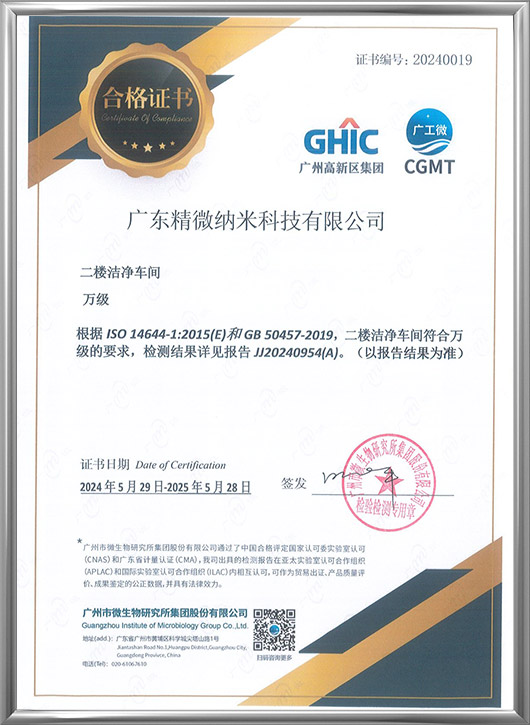
Class 10,000 cleanroom certification
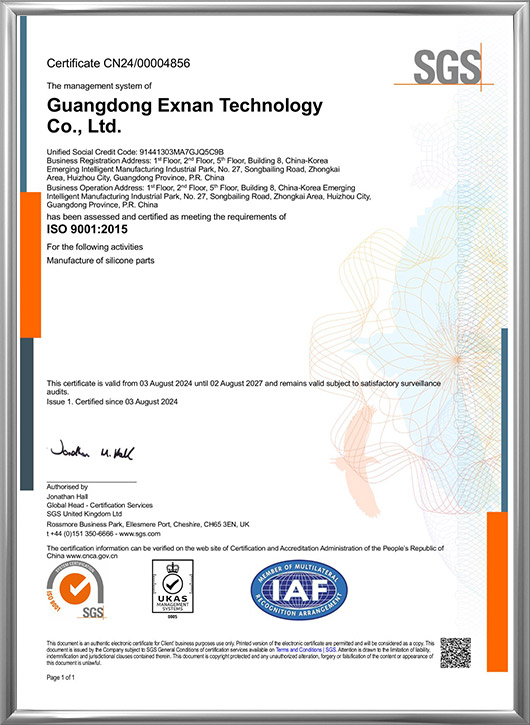
ISO 9001:2015
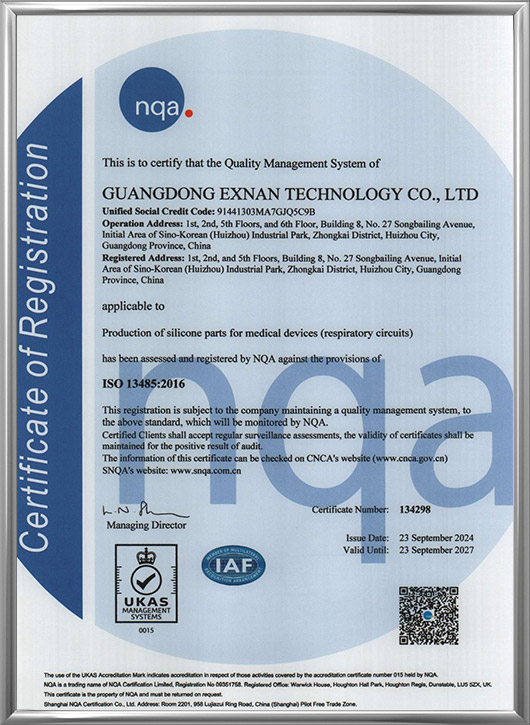
ISO 13485:2016
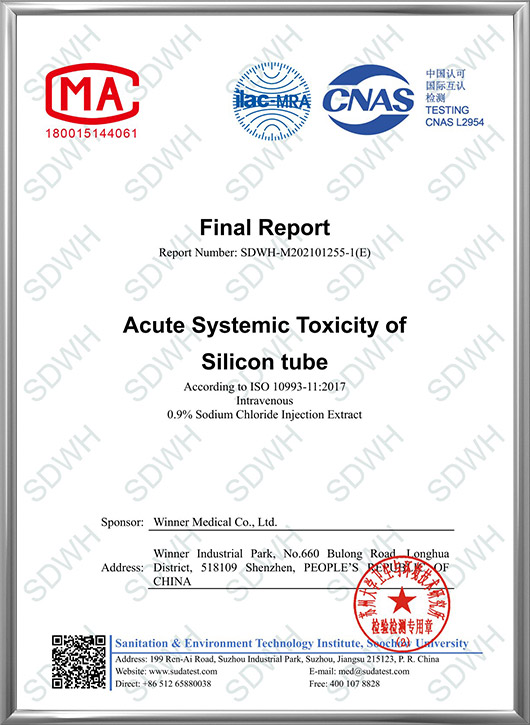
ISO 10993-11:2017 Tail vein injection
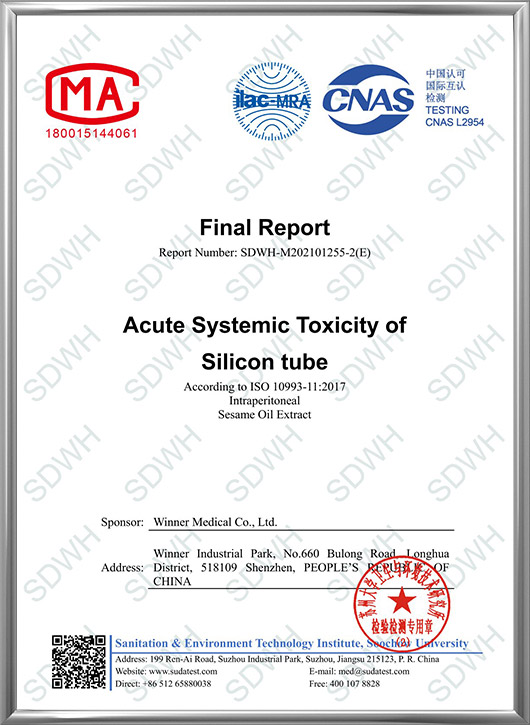
ISO 10993-11:2017 Intraperitoneal injection
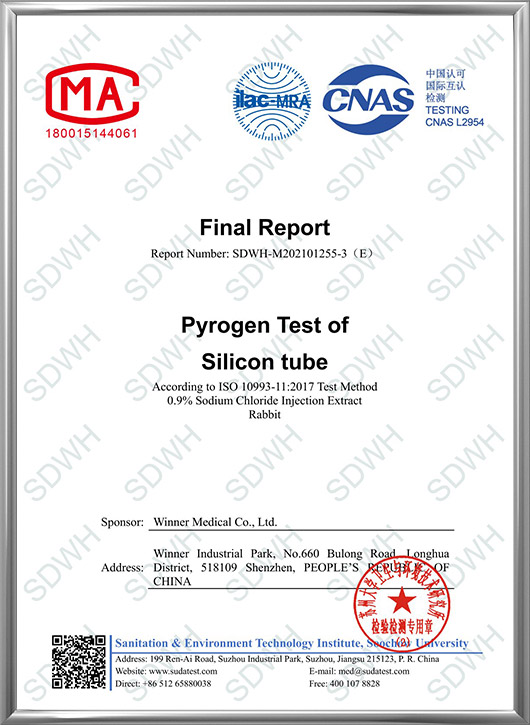
ISO 10993-11:2017 Pyrogens
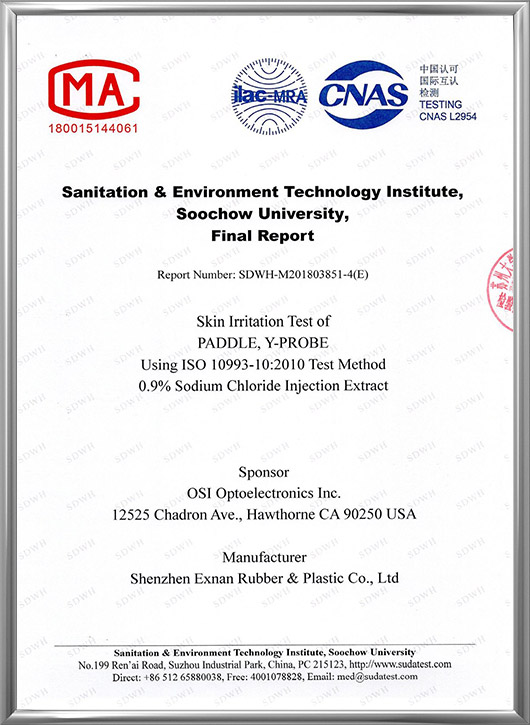
Skin irritation test for extract of 0.9% sodium chloride injection
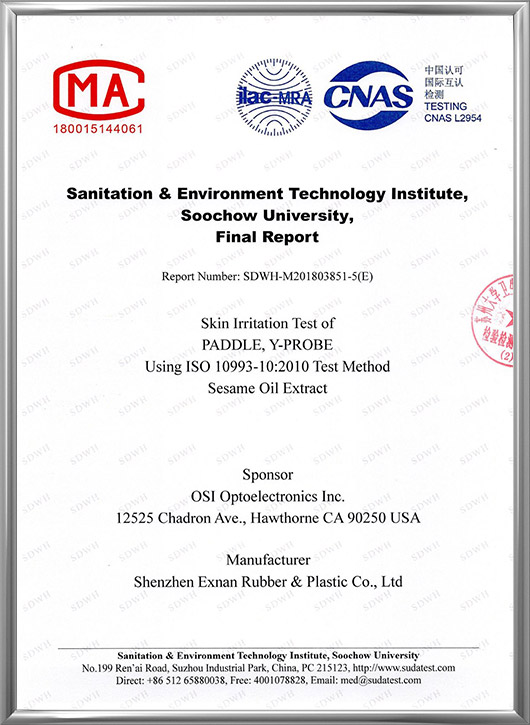
Skin irritation test for sesame oil extraction
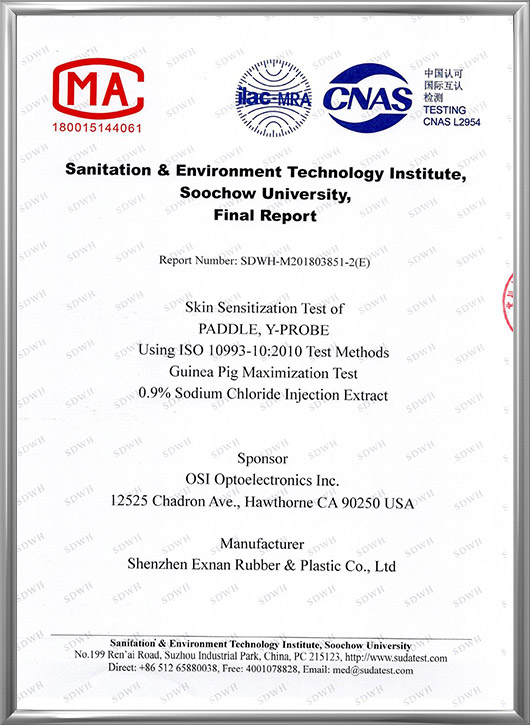
Skin sensitization test in guinea pigs using the maximization method with 0.9% sodium chloride injec
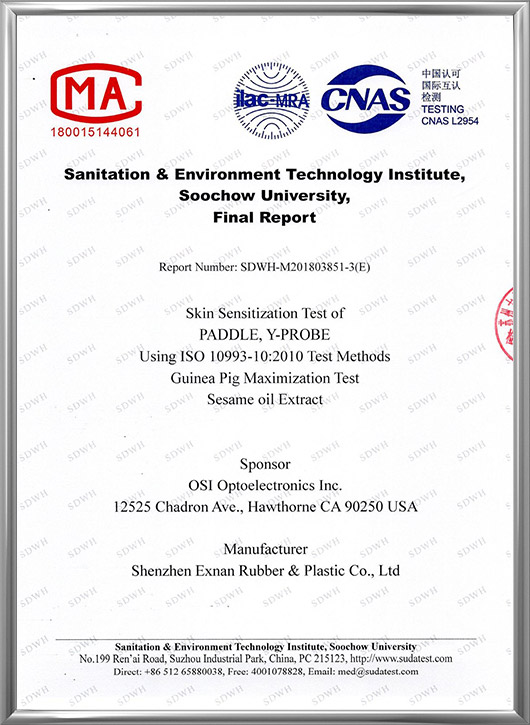
Skin sensitization test in guinea pigs:maximization method with sesame oil extraction
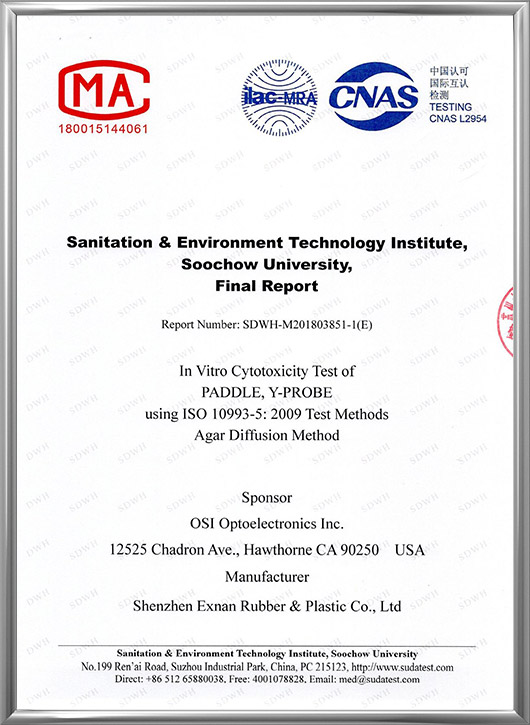
Cell toxicity test:agar diffusion method
Cooperating customers
Till now, Exnan products has been exports 35 countries, and more than 500 Medical equipment factory, health care companies, hospitals, clinics use our products, and win good reputation.














New
Our silicone accessories meet international medical standards through strict quality control.
Ensure patient safety with our premium products. Explore our catalog today!
News
Our silicone accessories meet international medical standards through strict quality control.
Ensure patient safety with our premium products. Explore our catalog today!
-

top Reco Silicone Parts Fail After Sterilization: 5 Proven Fixes
Silicone is chosen for medical components because it survives sterilization—but "survives" doesn't mean "unchanged." In fact, silicone parts fail after sterilization more often than most engineers expect, not because the material is wrong, but because the design didn't account for what sterilization does over time. Autoclave, gamma, EtO, and electron beam each affect silicone differently: hardness shifts, compression set increases, elasticity drops, and surface properties change. When the design
MORE -
top Reco Medical Silicone vs. TPE/TPU: Why Is Silicone Still the Preferred Material for Medical Consumables?
Medical silicone, TPE, and TPU are common elastomers for medical consumables. Silicone offers the widest temperature range (-50°C~250°C), withstands repeated steam sterilization, excels in aging resistance, features extremely low extractables, and provides the best biocompatibility for high-end consumables with prolonged body contact. TPE is low-cost but lacks heat and chemical resistance; TPU has high strength but hydrolyzes in humid heat. In comprehensive comparison, silicone remains the prefe
MORE -
top Reco Medical Silicone Mold Design: The First Gateway to Product Precision
The precision and quality of medical silicone components heavily depend on mold design. LSR molding imposes special requirements for cold runners, precision venting, uniform temperature control, and demolding structures. Needle-valve cold runners reduce waste; venting grooves and vacuum assistance prevent trapped air; multi-zone temperature control ensures consistent curing; and proper ejectors or sliders avoid tearing. Stainless steel molds with anti-stick coatings extend life. High-precision m
custom medical silicone components MORE -
top Reco New Requirements of ISO13485:2016 for Medical Silicone Suppliers
The upgrade to ISO13485:2016 imposes higher requirements on medical silicone suppliers: risk management, process validation, full traceability, and clean environment control. Biocompatibility reports (e.g., ISO10993) are required for materials, and production parameters must be documented. Suppliers need a controlled documentation system and must accept customer audits. Companies with independent cleanrooms, precision testing equipment, and training systems gain competitive advantages. Guangdong
MORE -
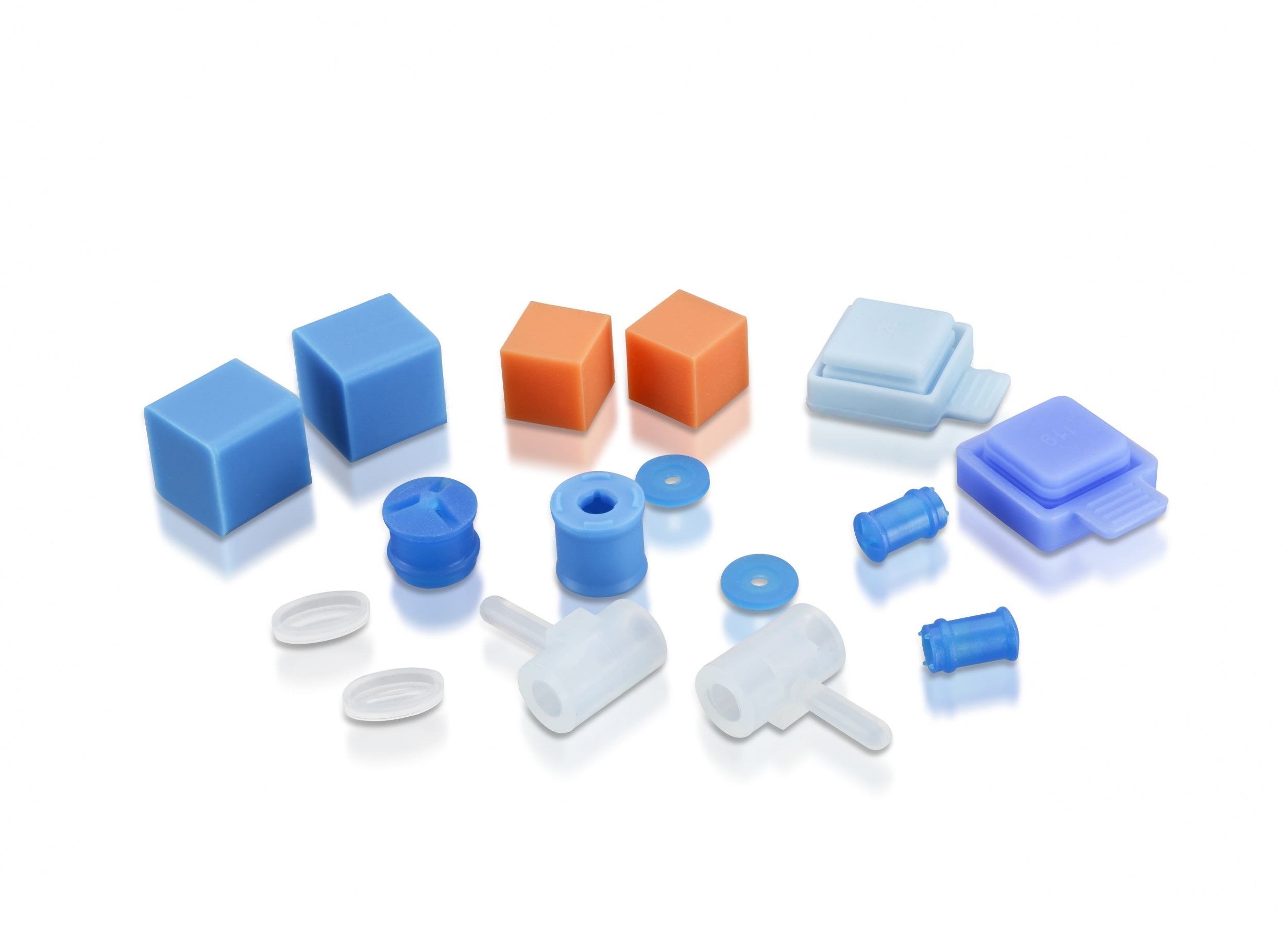
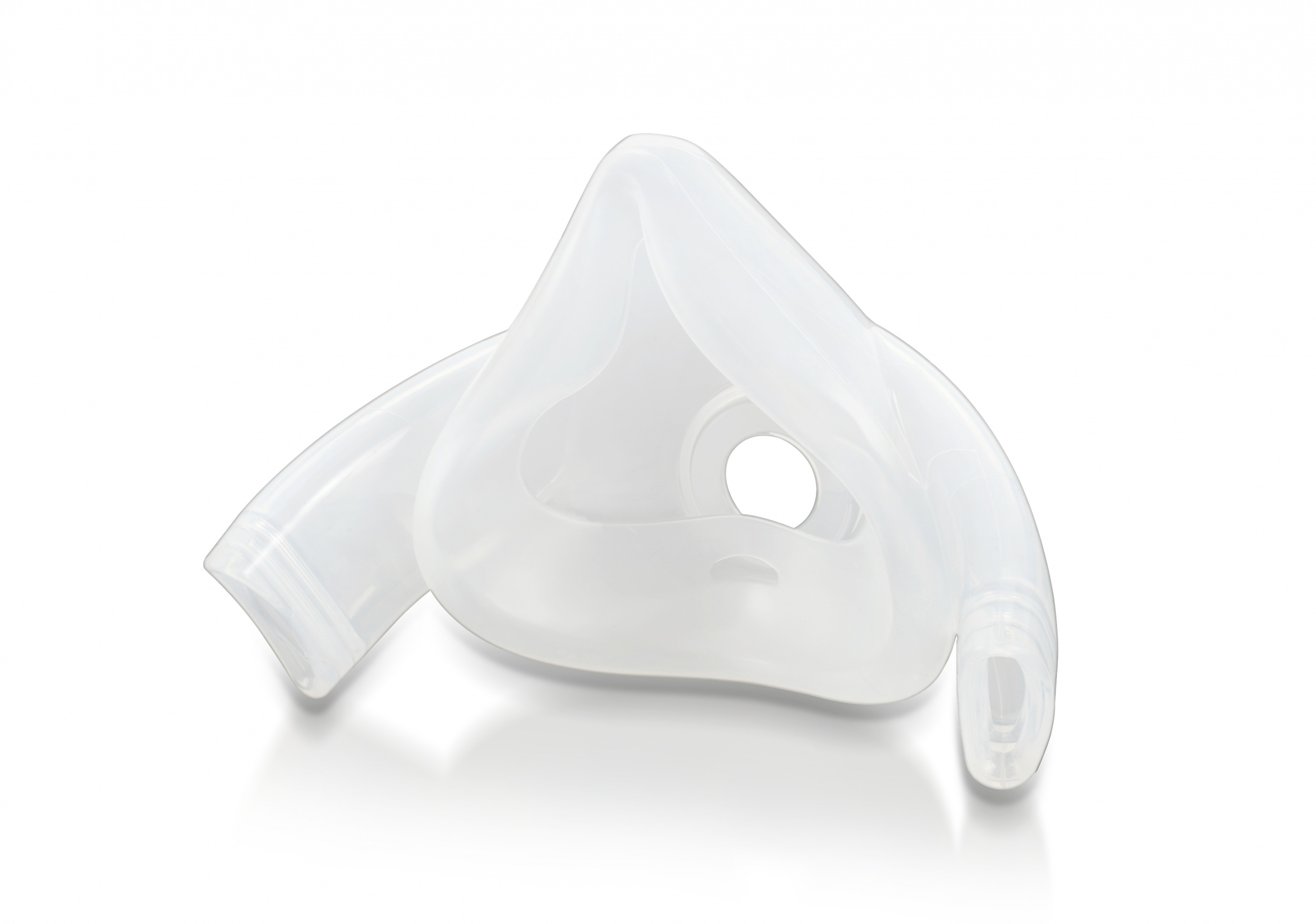
top Reco Medical Silicone Consumables Market Sees New Growth: Respiratory Equipment Drives Demand for Precision Components
Growing demand for respiratory medical devices is driving rapid expansion of the medical silicone consumables market. Silicone is the preferred material for masks, seals, and other components due to its biocompatibility, sterilization resistance, and softness. The global medical silicone market is expected to exceed USD 10 billion by 2027, with Asia-Pacific leveraging manufacturing advantages. Medical-grade products require strict control over cleanliness, precision, and batch consistency. Leadi
MORE -
top Reco From Concept to Compliant Mass Production – EXNAN’s One‑Stop Custom Implantable Silicone Components Service
EXNAN provides one‑stop custom silicone component services for short‑term (≤29 days), medium‑term (29–365 days), and long‑term (>365 days) implantable devices. We manage the entire workflow: design, material selection, tooling, process validation, volume production, sterilization, and packaging. For each implant duration, we optimize aging resistance, low leachables, easy removal, or permanent stability accordingly. Production takes place in a Class 10,000 cleanroom under ISO 13485 with full
custom medical silicone components MORE


Recent News
—
-
top Reco Silicone Parts Fail After Sterilization: 5 Proven Fixes
Silicone is chosen for medical components because it survives sterilization—but "survives" doesn't mean "unchanged." In fact, silicone parts fail after sterilization more often than most engineers expect, not because the material is wrong, but because the design didn't account for what sterilization does over time. Autoclave, gamma, EtO, and electron beam each affect silicone differently: hardness shifts, compression set increases, elasticity drops, and surface properties change. When the design
-
top Reco Medical Silicone vs. TPE/TPU: Why Is Silicone Still the Preferred Material for Medical Consumables?
Medical silicone, TPE, and TPU are common elastomers for medical consumables. Silicone offers the widest temperature range (-50°C~250°C), withstands repeated steam sterilization, excels in aging resistance, features extremely low extractables, and provides the best biocompatibility for high-end consumables with prolonged body contact. TPE is low-cost but lacks heat and chemical resistance; TPU has high strength but hydrolyzes in humid heat. In comprehensive comparison, silicone remains the prefe
-
top Reco Medical Silicone Mold Design: The First Gateway to Product Precision
The precision and quality of medical silicone components heavily depend on mold design. LSR molding imposes special requirements for cold runners, precision venting, uniform temperature control, and demolding structures. Needle-valve cold runners reduce waste; venting grooves and vacuum assistance prevent trapped air; multi-zone temperature control ensures consistent curing; and proper ejectors or sliders avoid tearing. Stainless steel molds with anti-stick coatings extend life. High-precision m
-
top Reco New Requirements of ISO13485:2016 for Medical Silicone Suppliers
The upgrade to ISO13485:2016 imposes higher requirements on medical silicone suppliers: risk management, process validation, full traceability, and clean environment control. Biocompatibility reports (e.g., ISO10993) are required for materials, and production parameters must be documented. Suppliers need a controlled documentation system and must accept customer audits. Companies with independent cleanrooms, precision testing equipment, and training systems gain competitive advantages. Guangdong
-
top Reco Medical Silicone Consumables Market Sees New Growth: Respiratory Equipment Drives Demand for Precision Components
Growing demand for respiratory medical devices is driving rapid expansion of the medical silicone consumables market. Silicone is the preferred material for masks, seals, and other components due to its biocompatibility, sterilization resistance, and softness. The global medical silicone market is expected to exceed USD 10 billion by 2027, with Asia-Pacific leveraging manufacturing advantages. Medical-grade products require strict control over cleanliness, precision, and batch consistency. Leadi
-
top Reco From Concept to Compliant Mass Production – EXNAN’s One‑Stop Custom Implantable Silicone Components Service
EXNAN provides one‑stop custom silicone component services for short‑term (≤29 days), medium‑term (29–365 days), and long‑term (>365 days) implantable devices. We manage the entire workflow: design, material selection, tooling, process validation, volume production, sterilization, and packaging. For each implant duration, we optimize aging resistance, low leachables, easy removal, or permanent stability accordingly. Production takes place in a Class 10,000 cleanroom under ISO 13485 with full
-

top Reco LSR Liquid Silicone Rubber – Driving the Precision Manufacturing Transformation in Medical Components
LSR (Liquid Silicone Rubber) is transforming medical component manufacturing. Growing at 10.07% CAGR, the LSR market reached $3.71B in 2025 and accelerates as device miniaturization demands high-precision, flash-free parts. LSR injection molding enables automated cycles of seconds, ideal for multi-lumen manifolds, thin-wall seals, and drug delivery systems. Recent launches: DuPont Liveo™ C6-8XX (USP Class VI, EtO/gamma compatible) and Momentive Silopren™ LSR 4000 (micro-molding optimized). With
-
top Reco Without Post-Curing, Would You Use This Silicone Part in a Medical Device?
Post-curing is an essential step in medical silicone manufacturing that cannot be skipped. Without it, residual unreacted substances and low-molecular-weight cyclics can cause leachable contamination, cytotoxicity failure, performance drift, and odor. Buyers should verify post-curing by reviewing batch records, smell testing, requesting data, and on-site audits. Post-curing is a fundamental requirement for medical-grade quality.
Welcome to contact us
If you have any questions, please fill in the relevant information. Weare very willing to provide more information and a full range ofservices for both you and your company
Welcome to contact us
If you have any questions, please fill in the relevant information. Weare very willing to provide more information and a full range ofservices for both you and your company
EXNAN

点击右上角
分享给朋友吧
Copyright © 2004-2024 Guangdong Exnan Technology Co.,Ltd
点击右上角
分享给朋友吧
Copyright © 2004-2024 Guangdong Exnan Technology Co.,Ltd

 +86-0752-3869959 / 3869960
 +86 180 0752 8206
 Building 8, China-Korea Emerging Intelligent Manufacturing Industrial Park, No.27, Songbailing Road, China-Korea (Huizhou) Industrial Park, Zhongkai Area, Huizhou City, Guangdong Province, China

WeChat scan
