

Contact Us
lf you have any queries, get in touch today! Don't hesitate, We try to take the extra step forour customer satisfaction.
"
Our certificate
Possess 800 square meters of Class 10,000 dust-free workshop, Passed ISO9001:2015 quality management system certification and ISO13485:2016 medical device quality management system, and its products have obtained multiple biocompatibility tests, US FDA and EU LFGB certifications.
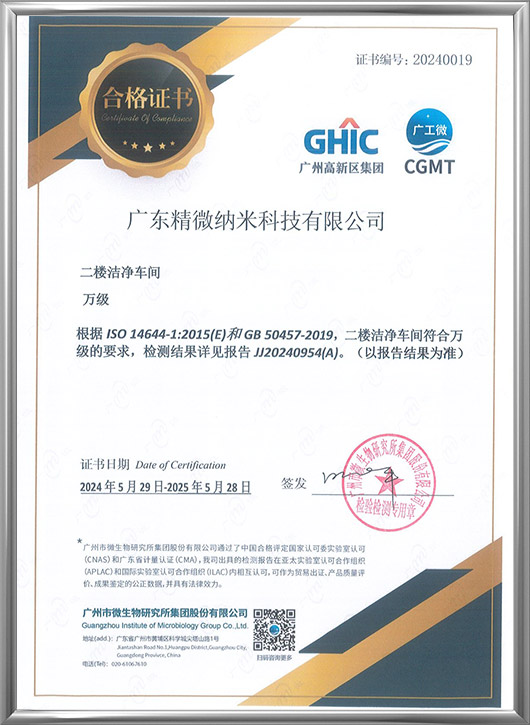
Class 10,000 cleanroom certification
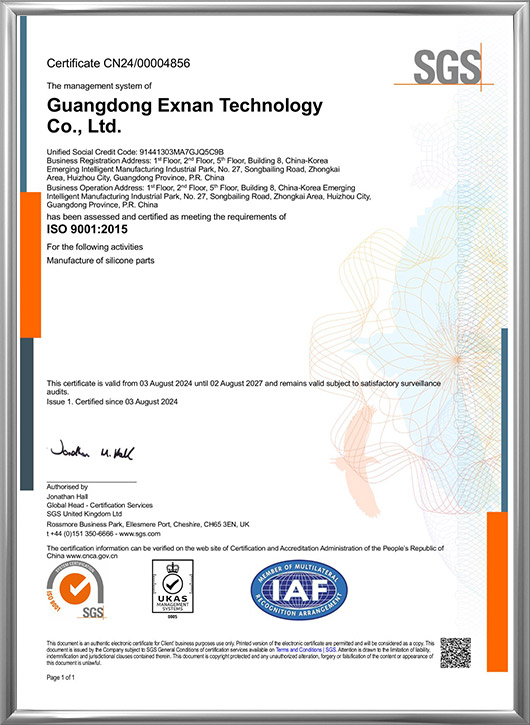
ISO 9001:2015
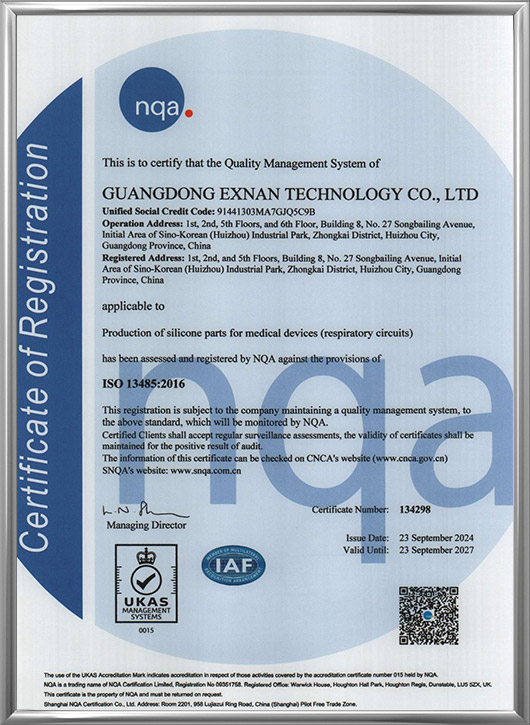
ISO 13485:2016
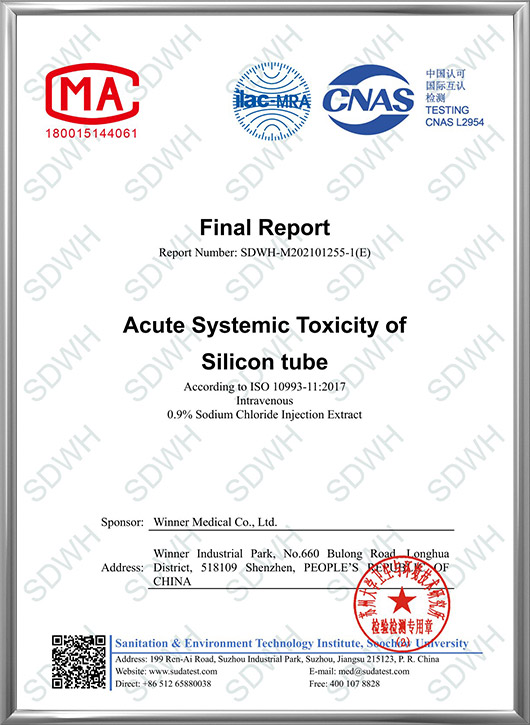
ISO 10993-11:2017 Tail vein injection
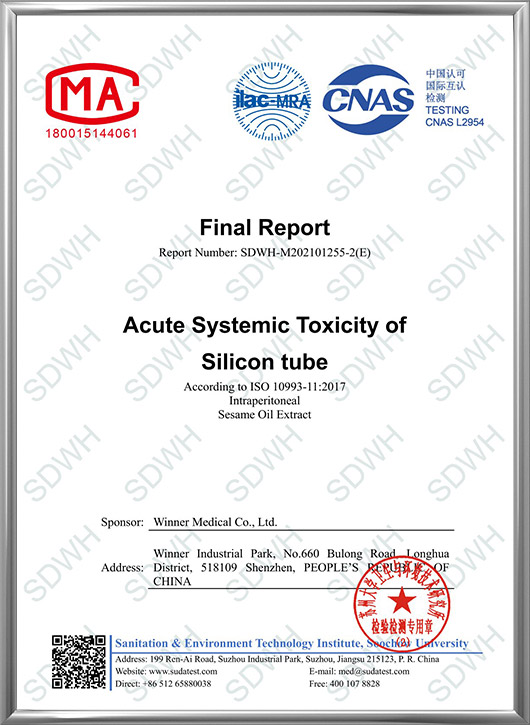
ISO 10993-11:2017 Intraperitoneal injection
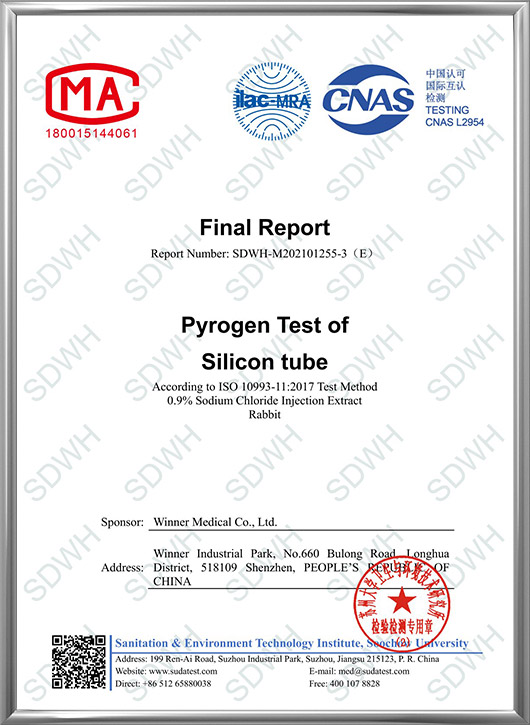
ISO 10993-11:2017 Pyrogens
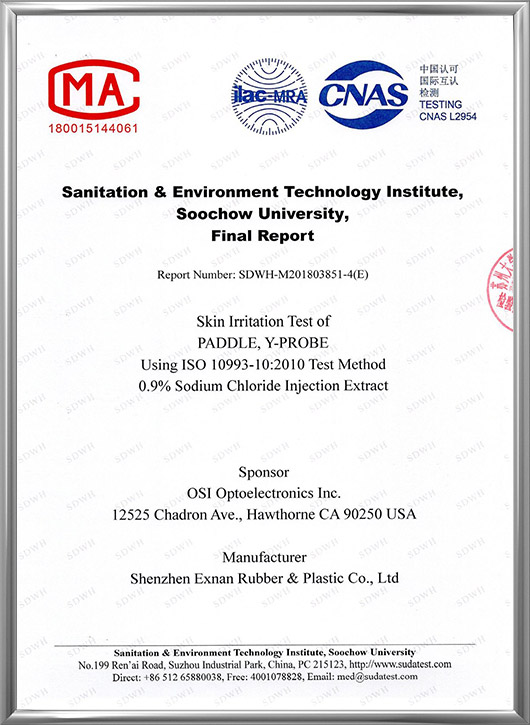
Skin irritation test for extract of 0.9% sodium chloride injection
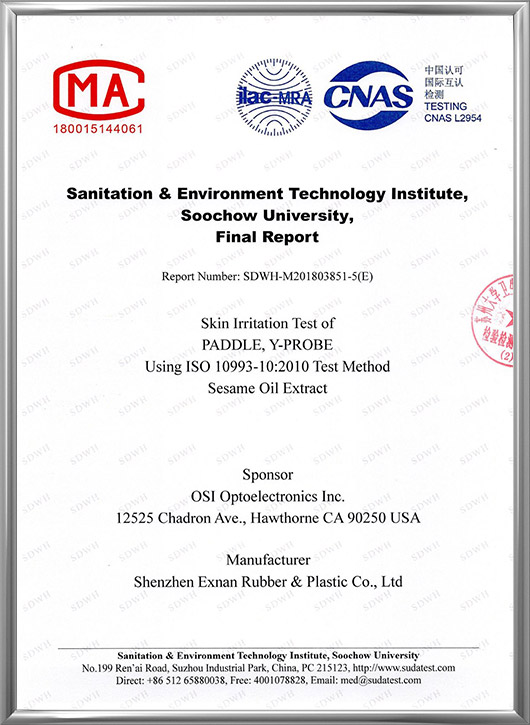
Skin irritation test for sesame oil extraction
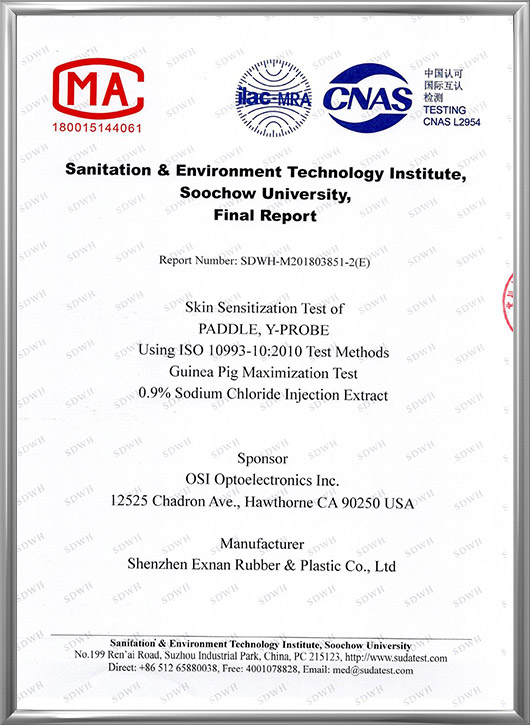
Skin sensitization test in guinea pigs using the maximization method with 0.9% sodium chloride injec
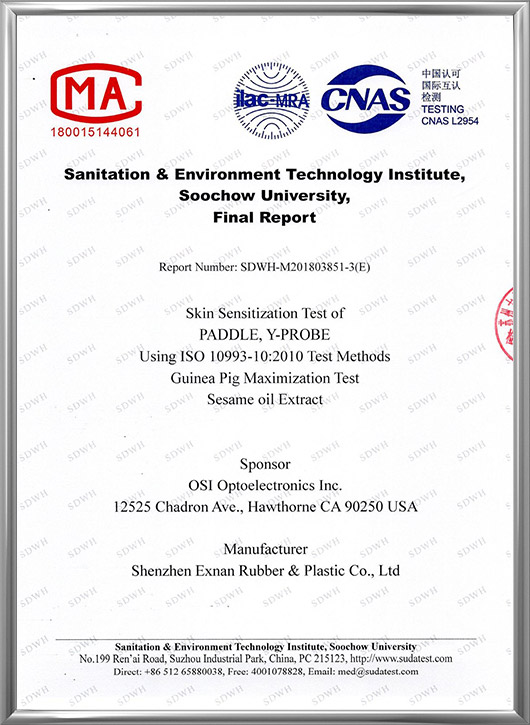
Skin sensitization test in guinea pigs:maximization method with sesame oil extraction
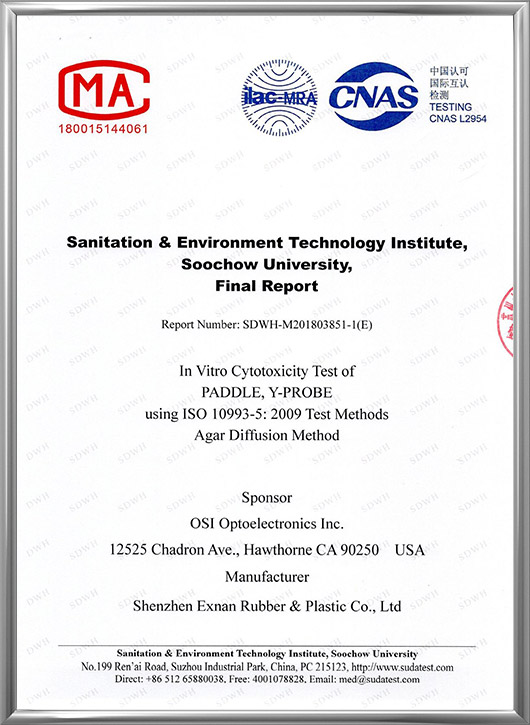
Cell toxicity test:agar diffusion method
Cooperating customers
Till now, Exnan products has been exports 35 countries, and more than 500 Medical equipment factory, health care companies, hospitals, clinics use our products, and win good reputation.










New
Our silicone accessories meet international medical standards through strict quality control.
Ensure patient safety with our premium products. Explore our catalog today!
News
Our silicone accessories meet international medical standards through strict quality control.
Ensure patient safety with our premium products. Explore our catalog today!
-

How to tell if silicone is medical grade?
Medical grade silicones are typically classified into three categories: non-implantable, short-term implantable, and long-term implantable. Materials that have been approved as Class V and VI can be considered medical grade silicones. Most medical grade silicones are at least Class VI certified.
MORE -
How is medical grade silicone manufactured?
One common method for manufacturing medical grade silicone is injection molding. In this process, liquid silicone is injected under high pressure into a heated mold made of metal or plastic. The even distribution of heat throughout the material ensures that the final product is strong and durable.
MORE -
How many types of silicone are there?
Silicone rubbers can be categorized into three main types based on their molecular structure: high-temperature vulcanized (HTV) silicone rubber, room-temperature vulcanized (RTV) silicone rubber, and liquid silicone rubber (LSR). HTV silicone rubbers are characterized by their high molecular weight polymers.
MORE -
What is the most common use of silicone?
Silicone rubber is widely utilized in many manufacturing sectors, ranging from kitchen utensils to automotive components, and is commonly used as a waterproof sealant, such as in bathrooms.
MORE -
Is silicone safe for medical use?
Silicone is deemed safe for medical use due to its chemical stability and is believed to be non-toxic. This has made it a popular choice for cosmetic and surgical implants, such as those used to enhance the size of body parts like the breasts and buttocks.
MORE -
What are the benefits of silicone material?
Benefits of Silicone Rubber** Silicone rubber has a lot of advantages that other materials just can't match. It can stand up to extreme temperatures, resist chemicals and water, withstand harsh weather conditions, and provide excellent electrical insulation. Plus, it has a long lifespan, making it a great choice for many applications.
MORE -
Why is silicone used in medical devices?
Silicone is a fantastic choice for medical devices because it is biocompatible, chemically inert, non-toxic, flexible, translucent, and has no odor or taste. It can be easily sterilized using various methods, making it super safe for use in hospitals. Additionally, many catheters and other types of tubing are designed for single-use, and silicone fits the bill perfectly for these applications.
MORE -
What are silicone gaskets used for?
Silicone gaskets are great for resisting oils, fuels, and a variety of chemicals. In the oil and gas industry, they're essential for handling extreme temperatures and sealing everything from oil to fuel to coolants.
MORE


Recent News
—
Welcome to contact us
If you have any questions, please fill in the relevant information. Weare very willing to provide more information and a full range ofservices for both you and your company
Welcome to contact us
If you have any questions, please fill in the relevant information. Weare very willing to provide more information and a full range ofservices for both you and your company
EXNAN

点击右上角
分享给朋友吧
Copyright © 2004-2024 Guangdong Exnan Technology Co.,Ltd
点击右上角
分享给朋友吧
Copyright © 2004-2024 Guangdong Exnan Technology Co.,Ltd

 +86-0752-3869959 / 3869960
 +86 180 0752 8206
 Building 8, China-Korea Emerging Intelligent Manufacturing Industrial Park, No.27, Songbailing Road, China-Korea (Huizhou) Industrial Park, Zhongkai Area, Huizhou City, Guangdong Province, China

WeChat scan
